Supreme Court Dismisses Fundamental Rights Petition Challenging Gender Reassignment Circular Without Hearing
21-Jul-2026.
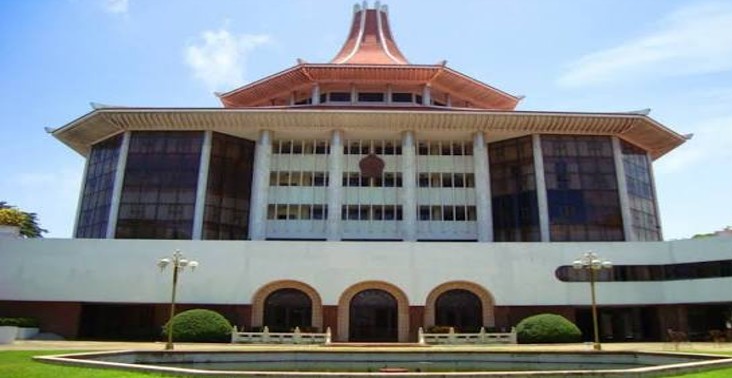
The Supreme Court has dismissed, without granting leave to proceed, a fundamental rights petition seeking the annulment of circulars and legislative provisions that permit gender reassignment through surgery without a biological basis.
The petition was filed by retired Sri Lanka Air Force officer and differently abled veteran Shantha Jayathilaka. Former Presidents Maithripala Sirisena and Ranil Wickremesinghe, along with incumbent President Anura Kumara Dissanayake, were among those named as respondents.
The petition was taken up on July 20 before a Bench comprising Justices Preethi Padman Surasena and Arjuna Obeysekera.
Appearing in person, the petitioner argued that a 2015 circular issued by the Director General of Health Services, which allows individuals to undergo gender reassignment surgery upon the recommendation of a psychiatrist and obtain revised birth certificates and National Identity Cards reflecting their new gender, was unlawful.
Deputy Solicitor General Nirmalan Vigneswaran, appearing for the Attorney General, submitted that under the Constitution, a fundamental rights petition must be filed within one month of the alleged violation. Since the petitioner had challenged circulars issued between 2015 and 2024 only in 2026, the application was time-barred and should therefore be dismissed.
Meanwhile, President's Counsel Sanjeeva Jayawardena, appearing for intervening petitioners including Dr. Radhika Coomaraswamy, argued that seeking to invalidate the Women's Empowerment Act No. 37 of 2024, enacted by Parliament, was contrary to the sovereignty of the people.
President's Counsel Saliya Pieris, appearing for the Women and Media Collective, further submitted that naming President Anura Kumara Dissanayake as a personal respondent was inconsistent with Article 35 of the Constitution, noting that any legal proceedings against the President must be instituted through the Attorney General.
Observing that the petitioner had failed to clearly establish how his fundamental rights had been violated, the Bench upheld the preliminary objections raised by the intervening parties and dismissed the petition without proceeding to a full hearing.