No Progress in Accountability for Violations Committed in Sri Lanka: UN Deputy High Commissioner
09-Sep-2026.
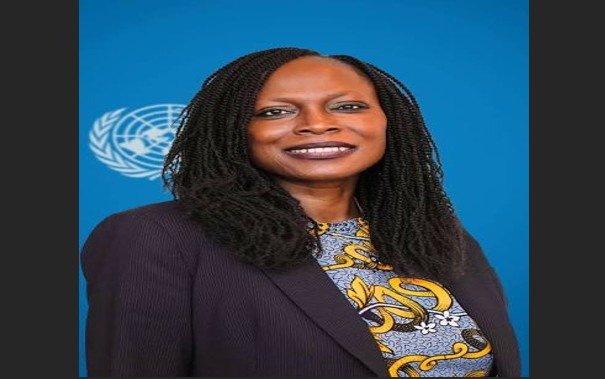
Accountability has still not been established for violations allegedly committed by Government forces and the Liberation Tigers of Tamil Eelam (LTTE) during the armed conflict, while criminal investigations into key cases continue to be delayed, UN Deputy High Commissioner for Human Rights Nada Al-Nashif has told the UN Human Rights Council.
She also expressed concern that the question of what happened to those who were forcibly disappeared remains unanswered.
At the 63rd session of the UN Human Rights Council, which commenced in Geneva, Deputy High Commissioner Al-Nashif on September 8, presented the written report of UN High Commissioner for Human Rights Volker Türk on progress achieved in promoting reconciliation, accountability and human rights in Sri Lanka.
According to the report, UN High Commissioner Volker Türk, who visited Sri Lanka approximately a year ago, had noted that the present Government had received a strong public mandate to ensure accountability and reconciliation and to end impunity and inequality.
Deputy High Commissioner Al-Nashif said that, following his visit, the UN Human Rights Council had emphasised the need to ensure human rights, justice and accountability in Sri Lanka during its session held approximately one month later.
She also pointed to progress in several important cases, including the arrest of a politician following investigations into the 2006 killing of the Vice Chancellor of the Eastern University and the arrest of a former head of the State Intelligence Service in connection with investigations into the Easter Sunday terrorist attacks.
She welcomed President Anura Kumara Dissanayake’s statement that there was no place for racism in the country and that priority would be given to reconciliation and coexistence among communities. However, she said deep structural reforms were still required in the country.
She expressed concern that accountability had still not been established for violations committed by Government forces and the LTTE during the armed conflict that ended in 2009, and that criminal investigations into key cases continued to face delays.
She also noted that, despite previous commitments, an independent prosecutor’s office separate from the Attorney General’s Department had not yet been established.
She further said that the Prevention of Terrorism Act continued to be used, resulting in violations of fundamental rights, including fair trial guarantees and proper judicial oversight.
She added that surveillance of affected persons, their families and civil society activists continued in the Northern and Eastern Provinces.
Meanwhile, she said that people had lost confidence in the Office on Missing Persons amid the discovery of mass graves in several parts of the country in recent times, and that the question of what happened to those who were forcibly disappeared remained unanswered.
Against this backdrop, she called for the Office on Missing Persons to be strengthened in order to restore public confidence in the institution.
She also expressed concern over the Sri Lankan Government’s rejection of her report concerning sexual violence during the war.
She further noted that, according to the 2026 Budget, 82 per cent of the country’s revenue had been allocated to servicing previously incurred debt.
She said the lack of adequate allocations for health, education and rebuilding the country affected by natural disasters was a serious concern, adding that funding was also necessary for these areas, particularly the development of the hill-country community.
She assured that the UN Human Rights Council was ready to provide the necessary support for a genuine process of justice, accountability and reconciliation.