Government loses Rs. 2,200 on every liquor bottle due to sticker system
16-Aug-2026.
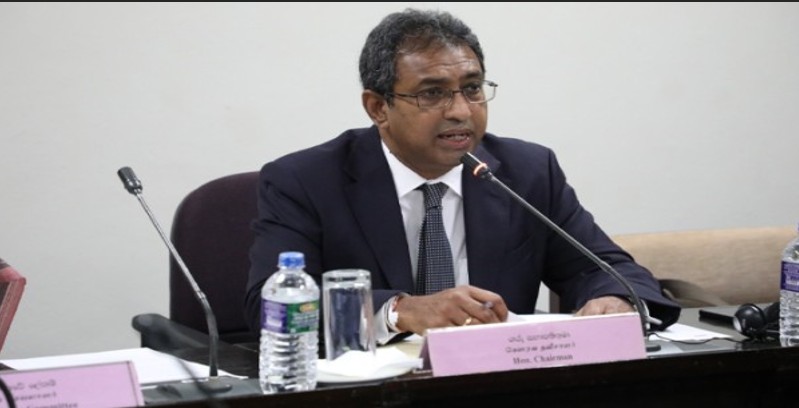
The government loses Rs. 2,200 on the sale of every liquor bottle due to the use of substandard stickers, according to the Committee on Public Finance.
Committee Chairman Harsha de Silva has instructed the Excise Department to submit, within one month, a report on solutions to the fundamental problems affecting the liquor industry.
The Committee on Public Finance has stressed the need to make the security sticker system used on liquor bottles more efficient and cost-effective.
The committee, chaired by MP (Dr.) Harsha de Silva, recently met in Parliament to discuss the security sticker system used on liquor bottles, regulations issued under the Imports and Exports (Control) Act No. 1 of 1969 and matters relating to the winding up of the Shram Vasana Fund established under the Finance Act No. 38 of 1971.
The committee paid particular attention to the cost of the security sticker system, its technical standards and the economic benefits received by the government.
It was revealed that the system had been introduced in line with the 2016 Budget proposals to reduce untaxed liquor consumption, safeguard excise revenue and prevent the circulation of counterfeit liquor. The contract was awarded in 2017 to the Indian company Madras Security Printers.
The committee also discussed practical difficulties associated with using physical stickers in high-speed liquor production processes. Accordingly, approval was granted in 2021 to use digital inkjet coding.
The committee noted that the same charge of US$5.99 per 1,000 printed paper stickers is also being imposed for digital coding.
Although the initial infrastructure costs associated with installing sticker-printing machines at bottling plants need to be considered, the cost of digital stickers is generally lower than that of paper stickers. Therefore, the committee stressed the need to review the existing cost structure and the benefits accruing to the government.
The committee also discussed the need to properly comply with international ISO standards for the security sticker system, introduce a track-and-trace system to monitor the movement of liquor products from production to consumers, and provide consumers with the facility to verify product authenticity through a mobile application.
The committee stressed that the new tendering process should consider not only price but also quality, data security and technical standards.
It also emphasised the need to involve officials with the required technical expertise in the tender evaluation process to prevent counterfeit stickers and fraud.
The Excise Department was instructed to study global best practices followed by other countries and prepare a report for submission to the committee.
The committee also considered new regulations issued under the Imports and Exports (Control) Act No. 1 of 1969.
The regulations, published in Extraordinary Gazette No. 2496/38 dated July 10, 2026, prohibit the importation into Sri Lanka of goods produced wholly or partly using forced labour.
The objective is to strengthen the legal framework for responsible trade and compliance with international labour standards.
The relevant Gazette notification has been submitted to Parliament for approval under Section 20 of the Act.
It was also noted that, as a result of the Gazette notification banning imports of goods produced using forced labour, Sri Lanka was able to be included under the lower and more favourable 10 per cent tariff category, instead of the initially imposed 12.5 per cent category, under the forced-labour-related tariff measures implemented under the United States’ Section 301 provisions, which concluded on July 23, 2026.
The committee also examined matters relating to the winding up of the Shram Vasana Fund, established under the Finance Act No. 38 of 1971.
The fund, established under legislation in 1998 and amended by legislation in 2019, has been identified for closure due to its lack of relevance to the present circumstances, inadequate efficiency and underutilisation of its assets.
Officials informed the committee that essential services provided by the fund would continue through the Ministry of Labour following its closure.
This is expected to reduce the cost of maintaining a separate institutional structure and enable more efficient utilisation of public resources.