Sending Sri Lankan Troops to Haiti Would Be Extremely Dangerous: Yasmin Sooka
13-Sep-2026.
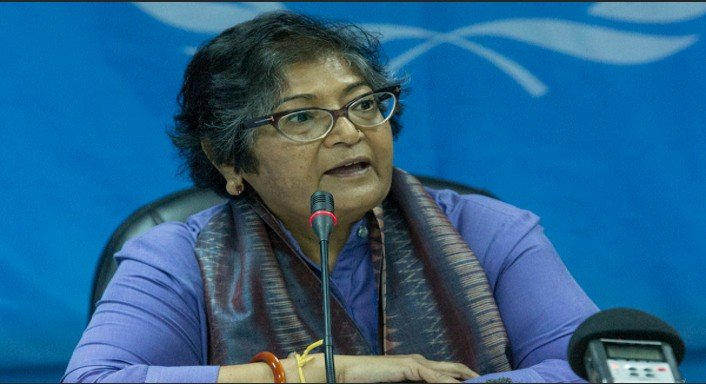
Yasmin Sooka, Executive Director of the International Truth and Justice Project, has warned that deploying Sri Lankan troops to Haiti, where a large proportion of members of armed groups are children, could have serious consequences for Haitian children, given the Sri Lankan military's history of child abuse. She further stated that the United Nations' failure to insist on an independent human rights review of these personnel demonstrates its double standards.
Yasmin Sooka made these observations in an article published on an international online media platform in collaboration with journalist Frances Harrison concerning this highly controversial issue. She further stated:
The mandate of the anti-gang force operating in Haiti is due to expire on September 30 and the United Nations Security Council is expected to decide shortly whether to renew the mandate. Sri Lanka's contribution to this force is significant. According to data from Sri Lanka's Ministry of Defence, 900 military personnel and 189 Police Special Task Force personnel have been deployed as part of the force.
Sri Lanka's contribution has raised serious concerns in view of the country's deeply troubling past record in Haiti. A confidential United Nations investigation found that more than 134 Sri Lankan personnel had allegedly engaged in misconduct and sexual abuse involving Haitian girls, some as young as eight, between 2005 and 2007. However, those responsible were not punished. Instead, the officers concerned were subsequently promoted.
Under its human rights policy framework, the United Nations has a duty to prevent and protect against human rights violations. However, the process for reviewing the conduct and backgrounds of Sri Lankan military personnel has completely broken down. In June 2024, the Human Rights Commission of Sri Lanka withdrew from the review process concerning peacekeeping personnel due to political pressure. Since then, no credible alternative mechanism has been established for this purpose. Instead, the fact that officers who were in positions of command during the period from 2005 to 2007 are now participating in the review process has raised concerns.
In this regard, the United Nations made an independent human rights review mechanism mandatory for Bangladesh, but has failed to insist on such a mechanism for Sri Lanka. This demonstrates the United Nations' double standards. Given that a large proportion of those belonging to armed groups in Haiti are currently children, she warned that deploying Sri Lankan troops, who have a history involving child abuse, could seriously affect Haitian children.