Integrated Mechanism Needed to Address Prisoners’ Grievances
10-Aug-2026.
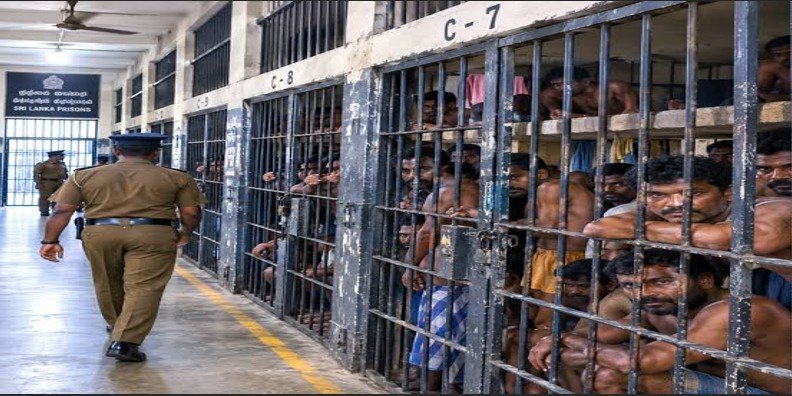
Chairman of the Committee for Protecting the Rights of Prisoners, Attorney-at-Law Senaka Perera, has stressed the need for the Government to establish an integrated mechanism that listens to the grievances and demands of prisoners and provides permanent solutions to the problems facing the country’s prison system.
He said that serious problems had arisen because the authorities had failed to properly understand the severe crisis prevailing within the prison system, adding that temporary measures were not an appropriate solution to the prison crisis.
He made these remarks while speaking at a media briefing held at the office of the Committee for Protecting the Rights of Prisoners on August 8, 2026.
He further said:
“We have repeatedly warned the authorities that the country’s prison system was reaching a critical point. Although the prison system has facilities to accommodate only around 18,000 inmates, nearly 43,000 prisoners are currently being held. This means that prisoners are being held in extremely overcrowded conditions, at nearly four times the intended capacity. Instead of addressing this genuine problem, the Government is attempting to give it a different interpretation.
“The existing laws have also contributed to the unnecessary detention of people and prolonged periods of imprisonment. Under Section 54 of the Poisons, Opium and Dangerous Drugs Ordinance, those arrested for possessing more than 10 grammes of narcotics can be granted bail only by the High Court. Since a report from the Government Analyst is required, it can take more than a year to obtain such a report. As a result, suspects are compelled to remain in prison throughout this period.
“If the authorities fail to understand the actual situation in the prison system and instead claim that it is a conspiracy or politically motivated, there will never be a solution to this problem. The Government’s claim that a conspiracy is being carried out at the prisons in Thumbara, Kalutara, Galle, Magazine and Welikada cannot be accepted.
“The incidents that occurred at the Negombo Prison on July 5 and 6 were an expression of this genuine crisis. Instead of taking measures to address the problems faced by prisoners, action was taken against them, including alleged acts of torture.
“Nearly 60 per cent of prisoners are connected to allegations involving drug-related offences. Although the Act No. 54 of 2007 on the Treatment and Rehabilitation of Persons Addicted to Dangerous Drugs provides for the establishment of rehabilitation centres and treatment of such persons, the law has effectively been sidelined and the traditional practice of confining prisoners within four walls continues.
“Although the Government has decided to establish an integrated mechanism to address the prison crisis, the views of the prisoners have not been sought. Solutions imposed unilaterally with the involvement of the police and armed forces will only be temporary.
“If a permanent solution is to be found, the Government must listen to the demands and concerns of prisoners. The Government must bear direct responsibility for the lives and problems of prisoners who remain in its custody,” he said.