Retaining children within the school system is a major challenge: PM Harini
23-Aug-2026.
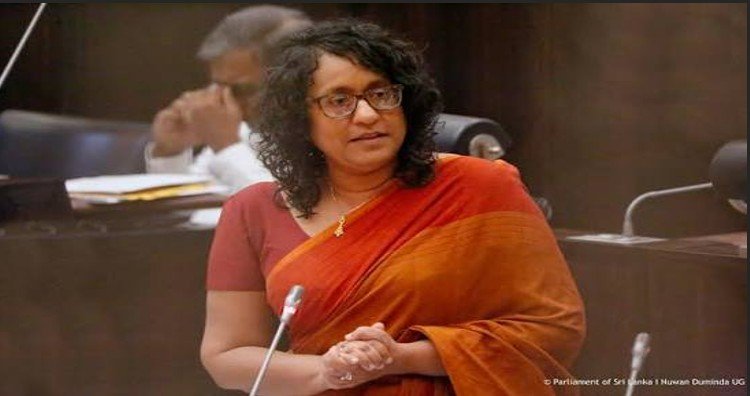
Compulsory education up to the age of 16 is currently guaranteed by law in the country. However, we have observed that retaining children within the school system is becoming a major challenge. In particular, there has been a declining trend in the number of children, especially boys, who continue their education after the age of 16, Prime Minister and Minister of Education Dr Harini Amarasuriya said.
Children need time to rest and rejuvenate, and that is why holidays are provided. They also need peace of mind, freedom and a space where they can feel free. Therefore, I urge parents and teachers not to place excessive academic pressure on children during this holiday period, she stressed.
She made these remarks while speaking during the parliamentary debate on the Employment of Women, Young Persons and Children (Amendment) Bill, held on August 20.
She further said:
“Our policy statement adopts a broad approach to child protection. Our primary objective is to identify situations and circumstances that expose children to harm and implement comprehensive interventions to address them. The legislative amendments currently being introduced form part of this broader approach.
“For example, there are inconsistencies in the definition of ‘child’ under different laws, with certain provisions referring to the ages of 15, 16, 17 or 18. There are also several gaps in the existing legal framework relating to child protection. Our Government is taking steps to address these gaps and strengthen child protection, while also implementing broader measures to address circumstances that expose children to harm.
“Compulsory education up to the age of 16 is currently guaranteed by law. Nevertheless, we have observed that keeping children within the school system is becoming a major challenge. There has been a decline, particularly among boys, in the number of children who continue their education after the age of 16.
“When children do not receive the full 13 years of school education, they may face various risks and vulnerabilities when they enter society. In some instances, they may be exposed to harmful behaviour and negative circumstances. Entering the workforce without the necessary skills and qualifications increases their vulnerability to exploitation and the risk of involvement in illegal activities.
“Taking these challenges into consideration, a key objective of the education reforms to be implemented from 2026 is to ensure that children remain within the school system throughout the full 13 years of education by creating a safe, supportive and conducive learning environment.”
“This year, we introduced the new curriculum for Grade 1. Preparations are also under way to introduce new curricula for Grades 2 and 6 in 2027. Alongside curriculum reforms, we are implementing several measures to strengthen the safety and suitability of the school environment.
“An allocation of Rs 1.9 billion has been made in 2026 to improve infrastructure facilities for primary education. Using this allocation, work has commenced to modernize selected schools and improve infrastructure facilities in accordance with the needs of children.
“We have also identified that children face various psychosocial problems arising from challenges within their family and social environments. When children do not have appropriate opportunities to discuss and address such concerns, their mental well-being and their ability to continue their education successfully can be seriously affected.
“Accordingly, we launched a dedicated program, in 2025 to strengthen the psychosocial well-being of children within the school system. The C2 Centre Initiative is being implemented from 2026 with the objective of establishing such centres in all schools. These centres are intended to provide counselling services and a safe space where children can express their concerns, seek assistance, spend time in a peaceful environment or simply feel secure.
“The pilot program has reportedly achieved considerable success. We express our appreciation for the support and dedication of the teachers who participated enthusiastically in the program. Teacher training for the initiative has also commenced.”
“Child protection cannot be confined solely to the education sector or to any particular area of intervention. We are taking necessary measures to ensure safety in the environments where children live and grow. Significant reforms are also being carried out in early childhood care and education. It is widely recognized that the period between three and five years of age is extremely important for a child’s development.
“We have introduced a handbook for pre-schools along with a policy framework for the pre-school curriculum. Training for pre-school teachers based on this handbook is scheduled to commence this week, with the objective of implementing the new curriculum in all pre-schools from next year.
“Children’s nutritional well-being is another important aspect of child protection. Recommendations have been issued regarding nutritious food suitable for children. The Ministry of Health has issued guidelines identifying foods that should and should not be provided to children, while the Ministry of Education is monitoring their implementation.
“The safety of children travelling by school transport is equally important. Therefore, the Ministry of Transport has introduced several conditions governing vehicles used to transport schoolchildren. We urge all parents to familiarise themselves with these requirements and ensure that appropriate safety standards are maintained.”
“I would once again like to reiterate my appeal to parents and teachers regarding the current school holiday period. Children also need holidays. We recognize and appreciate the dedication of principals and teachers who work to raise their schools to the highest standards. However, children also need time to rest and rejuvenate. That is why holidays are provided.
“Children need peace of mind, freedom and a space where they can feel free. Therefore, I urge parents and teachers not to place excessive academic burdens on children during this holiday period,” she said.