Rehabilitation programmes under way for 1,492 of 4,962 convicted prisoners
11-Aug-2026.
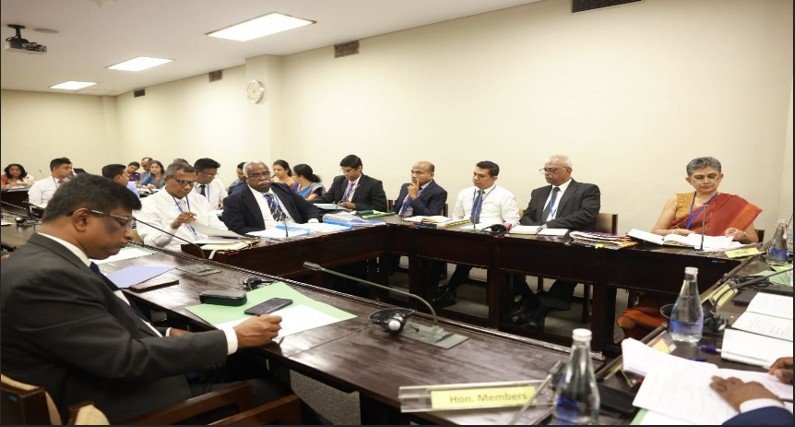
Rehabilitation programmes are currently being conducted for 1,492 of the 4,962 convicted prisoners in the country.
Officials of the Department of Prisons informed the Sectoral Oversight Committee on Governance, Justice and Civil Security that rehabilitation is provided to prisoners who are referred by courts as well as those who voluntarily come forward for rehabilitation. However, they said they do not have the capacity to provide rehabilitation to convicted prisoners involved in various other cases.
The issue of further strengthening rehabilitation programmes for drug-dependent persons, with the aim of reducing overcrowding in prisons, was discussed in detail at a meeting of the Sectoral Oversight Committee on Governance, Justice and Civil Security on August 10, 2026.
The discussion was held when the committee met recently in Parliament under the chairmanship of Parliamentarian Najith Indika.
Officials explained to the committee that rehabilitation programmes are being implemented by several government institutions, including the Department of Prisons, Department of Community Corrections, Bureau of Rehabilitation and the National Dangerous Drugs Control Board.
Officials of the Department of Prisons stated that rehabilitation programmes were being conducted for 1,492 of the 4,962 convicted prisoners. They said such programmes were provided to prisoners referred by courts and those who voluntarily sought rehabilitation, while opportunities were not available to provide rehabilitation to convicted prisoners involved in various cases.
Officials of the National Dangerous Drugs Control Board said steps had been taken to expand rehabilitation programmes aimed at helping drug-dependent persons overcome addiction. They noted that plans were being made to recruit the required personnel and strengthen rehabilitation services in Divisional Secretariat divisions across the country.
The committee also held an extensive discussion on the social acceptance of rehabilitated persons and shortcomings in issuing certificates of good conduct to such individuals.
The need to introduce amendments to existing laws and regulations to ensure that rehabilitation programmes are implemented more effectively was also emphasised.