JVP Should Seek a Referendum if It Wants to Protect Its Reputation, Says Mano Ganesan
03-Aug-2026.
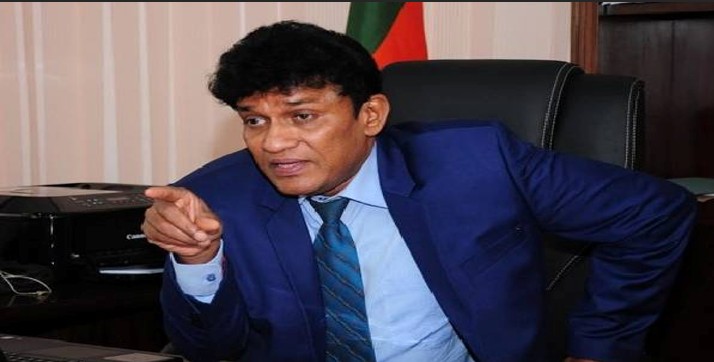
Tamil Progressive Alliance leader and Member of Parliament Mano Ganesan has stated that if the Janatha Vimukthi Peramuna (JVP), which built its political identity on justice, accountability and democratic governance, wishes to preserve its credibility, it should submit the Government's proposal to extend the retirement age of judges to a public referendum.
Commenting on the Government's decision, Ganesan said the administration has justified the proposal as an administrative measure intended to expedite the hearing of pending court cases. However, he noted that the legal fraternity has overwhelmingly dismissed this explanation as misleading.
According to him, attempts to alter the judicial system under the pretext of reducing case backlogs do not constitute judicial reform but amount to an attempt to amend the Constitution to serve political objectives, thereby undermining the rule of law. He questioned whether the present Government could justify adopting measures similar to those pursued under former President Mahinda Rajapaksa, which it had previously opposed.
Ganesan acknowledged that reducing the backlog of cases is essential. He pointed out that judges, members of the Judicial Service and legal experts have already submitted comprehensive written proposals to the Ministry of Justice containing practical solutions.
He observed that the principal causes of delays are well known and include shortages of administrative personnel, translators, fingerprint experts, laboratory staff, inadequate human resources, insufficient physical infrastructure and procedural delays, rather than the retirement age of judges.
He also noted that senior lawyer, left-wing thinker and National People's Power (NPP) executive committee member Lal Wijenayake has publicly opposed the proposal. With legal experts across political affiliations expressing opposition, the Government can no longer dismiss criticism as mere opposition politics, he said.
Ganesan stressed that no one is calling for corruption investigations to be halted. On the contrary, corruption allegations must be fully investigated and offenders must face the law.
He said investigations should proceed into allegations involving Minister Wasantha Samarasinghe, Deputy Minister Mahinda Samarasinghe, Kaduwela Mayor Ranjan Jayalal, the container controversy, the coal procurement scandal, the disappearance of US$2.5 million, and several complaints currently before the Commission to Investigate Allegations of Bribery or Corruption and the Criminal Investigation Department.
He emphasised that equal justice forms the foundation of the rule of law, whereas selective justice amounts to political victimisation. However, he maintained that the present issue concerns the Government's attempt to interfere with judicial independence for political purposes. Judicial independence, he said, means that courts are accountable only to the Constitution and not to the Government.
Ganesan further stated that constitutional experts believe the proposal cannot become law solely through a two-thirds parliamentary majority and may also require approval through a referendum.
Ironically, he noted, the judges who would directly benefit from the proposed extension would themselves determine whether a referendum is constitutionally necessary. This inherent conflict, he argued, makes it essential for the Government to seek the people's verdict.
He added that the Constitution empowers the President to place the matter directly before the people without first seeking a judicial determination, urging President Anura Kumara Dissanayake to exercise that authority.
History, he concluded, will judge both those who support the proposal and those who remain silent. Calling the issue a defining moment and a "trial by fire" for President Dissanayake, he reiterated his demand for a public referendum.