Amendments not aimed at Chief Justice: Government
30-Jul-2026.
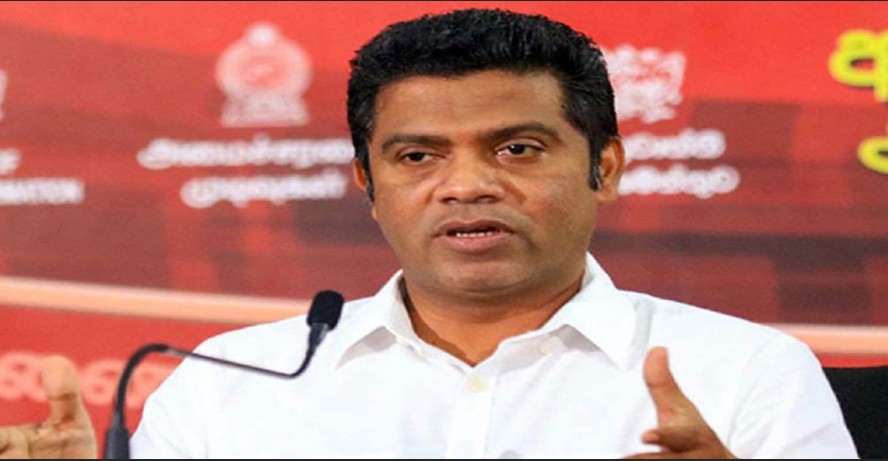
The proposed constitutional amendment or amendments to the Judicature Act are not being introduced with the intention of targeting any individual or the current Chief Justice, Cabinet Spokesman Minister Nalinda Jayatissa said.
He stated that the Government’s objective was to strengthen public confidence in the judiciary and provide relief to people by systematically reducing the backlog of pending cases.
“A constitutional amendment is a very broad matter. Adequate time must be provided for discussions on such amendments. Therefore, it cannot be carried out immediately,” the Minister said.
He made these remarks at the weekly Cabinet decision briefing held at the Government Information Department in Colombo on July 28.
The Minister further stated:
“This constitutional amendment or amendments to the relevant laws are not aimed at any individual or the current Chief Justice. Although some people have raised doubts based on past experiences, the Government is acting based on the mandate given by the people in September and November 2024 to rebuild confidence in the judiciary and reduce the backlog of cases systematically to provide relief to the public.”
He said the Government’s policy was to make the judicial system independent, efficient and less burdensome for the people.
“For this purpose, three key measures are being taken: increasing the number of courts, appointing new judges, and extending the retirement age of experienced judges to retain their services,” he said.
Accordingly, plans are underway to increase the number of judges in the Court of Appeal from 20 to 25 and Provincial High Court judges from 110 to 120.
Measures are also being taken to increase the retirement age of Supreme Court judges to 66 years, Court of Appeal judges to 65 years, High Court judges to 63 years, and District Judges and Magistrates to 62 years.
The Minister said a referendum would not be required for these amendments.
“The legal experts who drafted the 1978 Constitution clearly specified that a referendum, together with a two-thirds majority in Parliament, is required only for amendments relating to certain provisions including Articles 1, 2, 3, 6, 7, 8, 9, 10, 11, 83 and 62. Therefore, increasing the number of judges or extending their retirement age does not require a referendum,” he said.
He pointed out that when the number of Supreme Court and Court of Appeal judges was increased in October 2020, no referendum was requested or conducted.
“Anyone who understands the Constitution would not demand a referendum for this matter,” he said.
The Minister also stated that the Chief Justice has the authority to assign Court of Appeal judges to certain Provincial Civil Appellate Courts to hear appeals, thereby preventing people from distant areas having to travel to Colombo.
He added that plans were also underway to establish new High Courts outside Colombo, including in areas such as Kurunegala, Matara and Negombo, to clear thousands of pending cases.
He alleged that persons facing corruption allegations and criminal cases under previous governments did not want legal proceedings to be expedited.
“They oppose the establishment of new High Courts, special courts or obtaining the services of retired judges. They would prefer if the entire judicial system could be closed down so that they could escape,” he said.
However, the Minister stressed that the Government’s objective was to accelerate all court proceedings, including such cases.
He said the main criticism levelled against the amendments was that they were politically motivated and intended to take revenge against political leaders.
“The Opposition is misusing parliamentary privileges. If they claim outside Parliament that judges were influenced or that verdicts were obtained through discussions with judges, legal action can be taken,” he said.
He added that the dates of cases involving individuals such as Namal Rajapaksa, Chamara Sampath, Ranil Wickremesinghe or Sujeewa Senasinghe had already been fixed before the proposed constitutional amendments.
“Therefore, there is no connection between these amendments and their cases,” he said.
The Minister said the main issue faced by ordinary citizens was the delay in court proceedings.
“However, the concern of certain politicians is not the public interest in expediting cases, but finding methods to escape allegations against them, cases filed by the Attorney General’s Department and possible verdicts,” he said.
He said the Government was focusing on resolving issues faced by the public, including land disputes and other daily legal difficulties.
Referring to previous constitutional reform discussions, the Minister said similar matters had been discussed by the 2015 Constitutional Reform Committee chaired by Attorney Lal Wijenayake.
He said strong opposition to proposed reforms at that time had contributed to a change of government.
“A constitutional amendment is a broad matter. The public must be given sufficient time to discuss it. A Constitution that remains stable for decades without requiring repeated amendments must be created. It must also be discussed extensively in Parliament,” he said.
The Minister said an ordinary citizen would certainly welcome faster court proceedings.
“Only those facing corruption allegations and criminal cases oppose such measures. Around 1.1 million cases are currently pending, and people must be prevented from being forced to repeatedly visit courts without receiving justice,” he said.
He added that the BASL President and lawyers had the right to express their views and that the Government respected that right.
“Just as medical professionals want to reduce queues in hospitals, lawyers should also want to reduce delays in courts. If they have practical alternative solutions, they may present them. At present, the solution proposed by the Government is the most practical one,” he said.