Alternative measure to reduce prison overcrowding; Ali Sabry
16-Jul-2026.
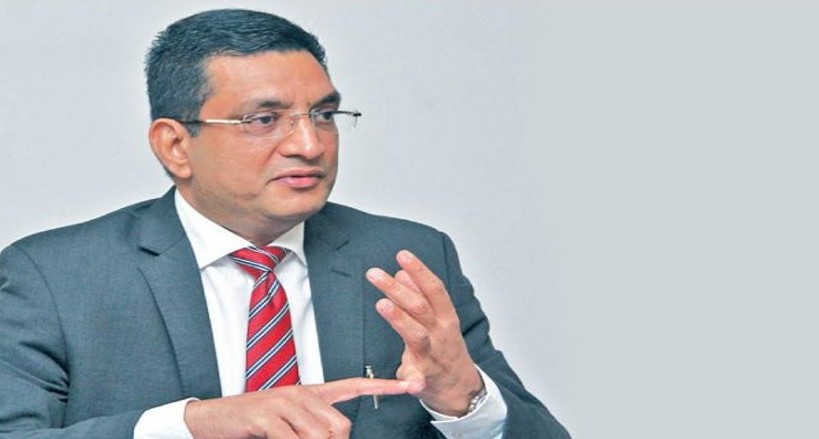
As an alternative measure to reduce prison overcrowding, the amendments introduced under Section 54 of the Poisons, Opium and Dangerous Drugs Ordinance in 2022 should be immediately reversed, former Justice Minister President’s Counsel Ali Sabry said.
He stated that he was not holding the post of Justice Minister when those amendments were introduced.
Speaking further regarding clashes occurring in prisons, he said:
“Until new officers are appointed to the Government Analyst’s Department, a programme should be implemented to expedite chemical analysis reports by providing existing officers with overtime facilities and other necessary support.
During my tenure as Justice Minister, we introduced a system with two shifts and provided officers with overtime and other facilities to speed up chemical analysis reports.
When I assumed duties as Minister in 2020, there were around 29,000 prisoners. By January 2021, we reduced that number to 18,000.
At present, bail can be granted by a Magistrate’s Court if the quantity of narcotics is below two grams. This limit should be increased to five grams. I was taking steps to introduce these amendments when my ministerial portfolio was changed.
According to the amendments we planned, bail could have been obtained from the Magistrate’s Court for quantities below five grams, from the High Court for quantities between five and ten grams, and from the Court of Appeal for quantities above 100 grams.
To reduce prison overcrowding, drug-dependent persons should be rehabilitated rather than imprisoned.
The increase in the number of prisoners is mainly due to the amendments introduced to the Poisons, Opium and Dangerous Drugs Ordinance in 2022 and delays in obtaining chemical analysis reports.
When we assumed office, there were 118 vacancies in the Government Analyst’s Department. These vacancies were not filled after 2022. Necessary work to make appointments has been underway since December last year.
After the 2022 amendment, cases involving more than two grams of narcotics could obtain bail through the High Court. However, under the new amendment, this authority was transferred to the Court of Appeal, requiring people from across the country to travel to the Colombo Court of Appeal.
Until the chemical analysis report is received, the pure weight of the narcotic cannot be determined. Obtaining such reports can take up to one year. Legal proceedings may take another six months. By then, one year and six months may have passed.
We are taking steps to amend this provision immediately upon assuming office.
Instead of considering the pure weight, there should be an option to determine the appropriate court based on the total weight.
To reduce prison overcrowding, construction work is being carried out to increase available facilities due to insufficient space in existing prisons.”
He further explained that Section 54 of the Poisons, Opium and Dangerous Drugs Ordinance No. 17 of 1924, amended by Act No. 41 of 2022, prohibits possession of addictive narcotic substances including heroin, cocaine, morphine, cannabis, opium and ‘ice’.
Under this section, Magistrate’s Courts do not have authority to grant bail to persons charged with such offences.
If a suspect seeks bail, the bail application must be submitted to the High Court. Further, when charges are filed under Section 54, a chemical analysis report must be obtained.
Since obtaining such reports may take nearly one year, suspects are required to remain in remand custody until the reports are received.
Under this provision, when the pure weight of narcotics is 10 grams or more according to the chemical analysis report, the High Court loses the authority to grant bail, and such authority lies with the Court of Appeal.
If the chemical analysis report confirms that the quantity is below 10 grams, bail may be granted by the High Court.
He said that due to the legal powers under this section, there have been instances where persons arrested by police, sometimes due to improper police procedures, have ended up being imprisoned.
He added that this has contributed to prison overcrowding and that conditions faced by persons held in prisons under such allegations have also been highlighted through social media.