Immediate Steps Needed to Protect Buddhism, Says Karu Jayasuriya
03-Jun-2026.
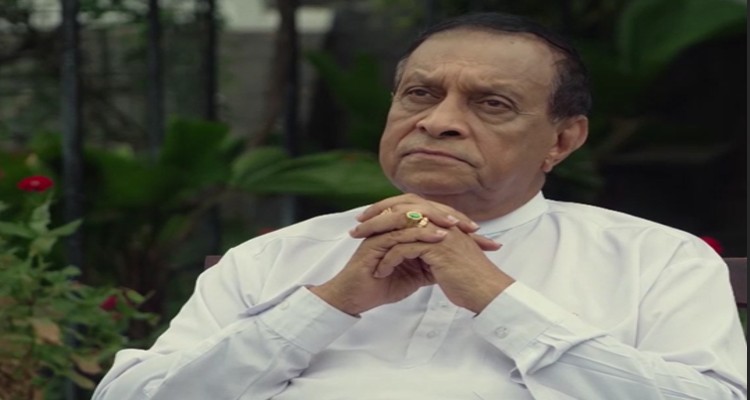
Former Speaker and Chairman of the National Movement for Social Justice, Karu Jayasuriya, has stated that the time has come to take immediate measures to safeguard and preserve Buddhism, as a series of incidents that have caused shock and distress among the Buddhist community and the nation as a whole have also led to deep divisions within society.
In a statement issued on the matter, Jayasuriya said that Sri Lanka is currently at a crucial juncture where it must reflect upon its rich heritage and work towards building a better future for its national identity.
He noted that Buddhism, which has been deeply rooted in Sri Lanka for more than 2,300 years, has been a fundamental force behind the country’s literary, cultural and social development. As a nation that has progressed while preserving its identity, Sri Lanka must continue to project itself with a forward-looking vision in the modern world. In that context, safeguarding the values of humanity that have long been upheld by society is a collective responsibility, he said.
According to available data, the Maha Sangha in Sri Lanka comprises seven divisions of the Siyam Nikaya, including the Asgiri and Malwatte Chapters, 22 divisions of the Amarapura Maha Sangha Sabha, and one division of the Ramanna Maha Nikaya. There are approximately 42,000 Buddhist monks attached to 12,235 registered temples across the country.
Against this backdrop, several incidents that have caused shock and concern among the Buddhist community and the wider public have been reported. Discussions and reactions arising from these developments have also contributed to significant divisions within society. Jayasuriya described this as a dangerous trend.
He said that the Maha Sangha led by the Most Venerable Mahanayake Theras, the Government headed by the President, and the people of Sri Lanka are all deeply concerned about the current situation.
According to Jayasuriya, the Mahanayake Theras have been closely monitoring developments. He referred to a recent clarification made by Southern Sri Lanka Chief Sanghanayake Ven. Dr. Omalpe Sobitha Thera during the opening ceremony of the National Vesak Festival and expressed confidence that the measures highlighted by the President could be implemented with firm commitment following due consideration.
He further stated that it would be beneficial if all stakeholders could arrive at a common consensus. He also pointed out that Ven. Dr. Narampanawa Ananda Anunayake Thera of the Asgiri Chapter had emphasised the importance of cooperation between the clergy and the laity during this period.
Jayasuriya also appreciated proposals made by former President Chandrika Bandaranaike Kumaratunga, describing them as timely and relevant.
He stressed that it would be commendable for the Maha Sangha to take the lead in implementing progressive measures in accordance with the guidance and advice of the Mahanayake Theras of the three Nikayas. He further suggested that an immediate dialogue involving the three Chapters, with the participation of lay leaders and the full support of the Government, would be appropriate.
He noted that the Diyawadana Nilame holds a significant lay custodial position within the Asgiri and Malwatte Chapters of the Siyam Nikaya. He also pointed out that the Amarapura Sangha Sabha has an active lay committee dedicated to Nikaya affairs, while the Ramanna Maha Nikaya has a strong Nikaya Protection Council. Their support, he said, would also be important in addressing the issue.
In addition, several Buddhist organisations, including the All Ceylon Buddhist Congress, the Young Men’s Buddhist Association (YMBA), the World Fellowship of Buddhists and the Buddhist World Foundation, could also contribute to the process.
Jayasuriya recalled that in 2015, following the request and guidance of the Mahanayake Theras of the three Chapters, a draft Nikaya Kathikawath Act was prepared. However, it was not implemented due to the failure to reach consensus.
He suggested that the present issue could be addressed by enforcing Sections 4.1 and 4.2 of the Viharagam and Devalagam Act and by granting the necessary authority to the Supreme Sangha Councils led by the Mahanayake Theras.
Stressing the urgency of initiating a process at the earliest possible opportunity, Jayasuriya said that these proposals were put forward in good faith and out of commitment to Buddhism. He added that if there were any shortcomings in the proposals, forgiveness was humbly sought.
This version is edited into a publication-ready news feature with formal Indian English usage, standard journalistic phrasing, and neutral attribution.