JVP Government Is Regressive: Points Out Dayan Jayatilleka
04-Aug-2025.
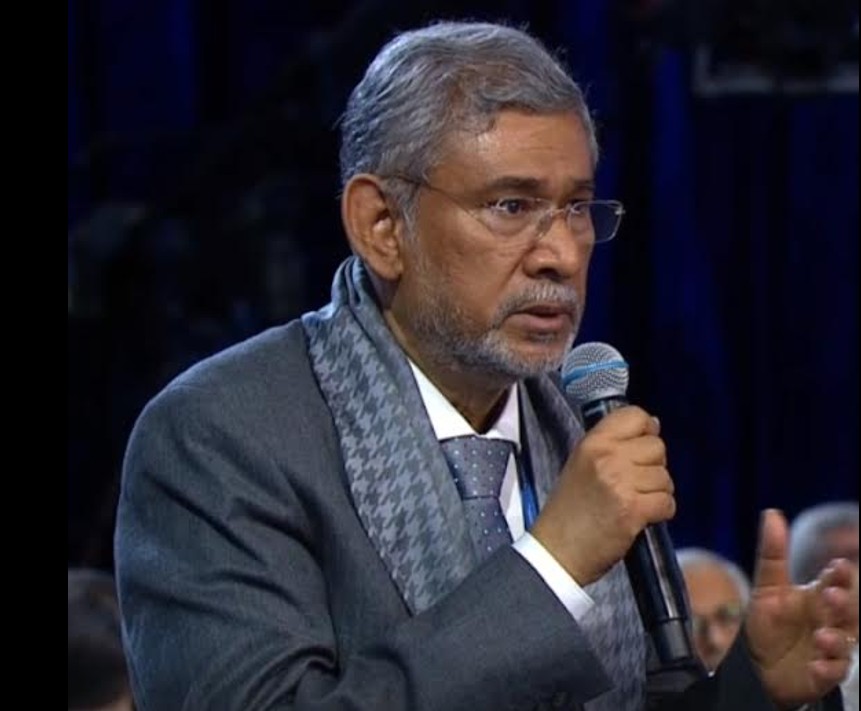
Diplomat Dr. Dayan Jayatilleka remarked that the JVP has consistently rejected Tamil self-determination and power-sharing, taking a more regressive stance than previous presidents.
Speaking on solutions to the Tamil national question and provincial council elections, he explained: After July 1983, two distinct but interconnected political developments dominated the southern political landscape: a diversion from a political solution to the Tamil question, and India’s emerging role in the conflict.
Black July made it clear that a political solution based on power-sharing was necessary. This led to the 1957 Bandaranaike-Chelvanayakam Pact, aiming at limited autonomy for the North and East.
He questioned where the JVP stood after 1983, recalling that its founder, Rohana Wijeweera, during his underground years, submitted a paper to the party’s Central Committee that was later secretly published in 1985 as a 350-page book titled "What Is the Solution to the Tamil Eelam Struggle?".
In that work, Wijeweera firmly rejected all forms of autonomy or power-sharing. Even district development councils contested by the JVP in 1981 were dismissed in his argument. The JVP’s stance wasn’t a reaction to Indian intervention but was articulated earlier.
Unlike Chinese and Vietnamese communists who accepted ethnic-regional autonomy under a central government, the JVP refused even this minimal concession. Since 1985, the party has never shifted its position.
Whether permanent, temporary, or partial, the JVP has never accepted any political or regional autonomy as a solution to the Tamil question. It doesn't even acknowledge it as a distinct political issue.
Analyzed through Leninist principles, JVP may claim socialism in words but practices majoritarian nationalism in deeds. The party even opposes the 13th Amendment, let alone half-measures like devolution.
It’s been 68 years since the Bandaranaike-Chelvanayakam Pact, 42 years since the Black July pogrom, 35 years since the first provincial council elections, and 12 years since the Northern Provincial Council’s last election. Yet President Anura Kumara Dissanayake remains silent on holding new polls.
The Tamil national dialogue has regressed to a pre-1957 stage, politically exposing the government, especially in the face of a vocal Tamil diaspora-led generation demanding justice for genocide.
If the government cannot credibly say it has elected provincial councils representing Tamils and holding dialogue with them, Sinhala majoritarian nationalism in the South will further escalate, intensifying ethnic polarization — an issue the JVP seems unconcerned with.
Even under JR Jayewardene, Chandrika Kumaratunga, and Mahinda Rajapaksa, provincial council elections were held. Notably, Mahinda, despite being criticized globally, held elections twice during his tenure. The current administration's silence is unprecedentedly regressive.
JVP, now operating as NPP, appears more regressive than any of its predecessors regarding provincial council elections and devolution.